Think about natural disasters like earthquakes and erosion. One happens quickly and dramatically, while the other happens slowly over time. Both need planning and protection. Economic forces work the same way - the biggest challenges for families and businesses aren't always sudden. They can happen gradually over many years. This is what we see with inflation, where prices can jump quickly or slowly eat away at what your money can buy.
If you remember the high inflation of the 1970s and early 1980s, or the price increases after the pandemic, this might sound familiar. Today, inflation is higher than many people want, and there are worries that tariffs (fees on imported goods) will make things more expensive. But inflation is happening alongside good employment, strong consumer spending, and healthy company profits. This creates a tricky situation for investors and government officials trying to balance economic growth and price stability.
Instead of waiting for inflation to become a bigger problem, smart long-term investors should build portfolios that can handle different situations while staying focused on their money goals. What do recent inflation reports tell us about the economy and investing?
Rising prices reduce what your money can buy over time
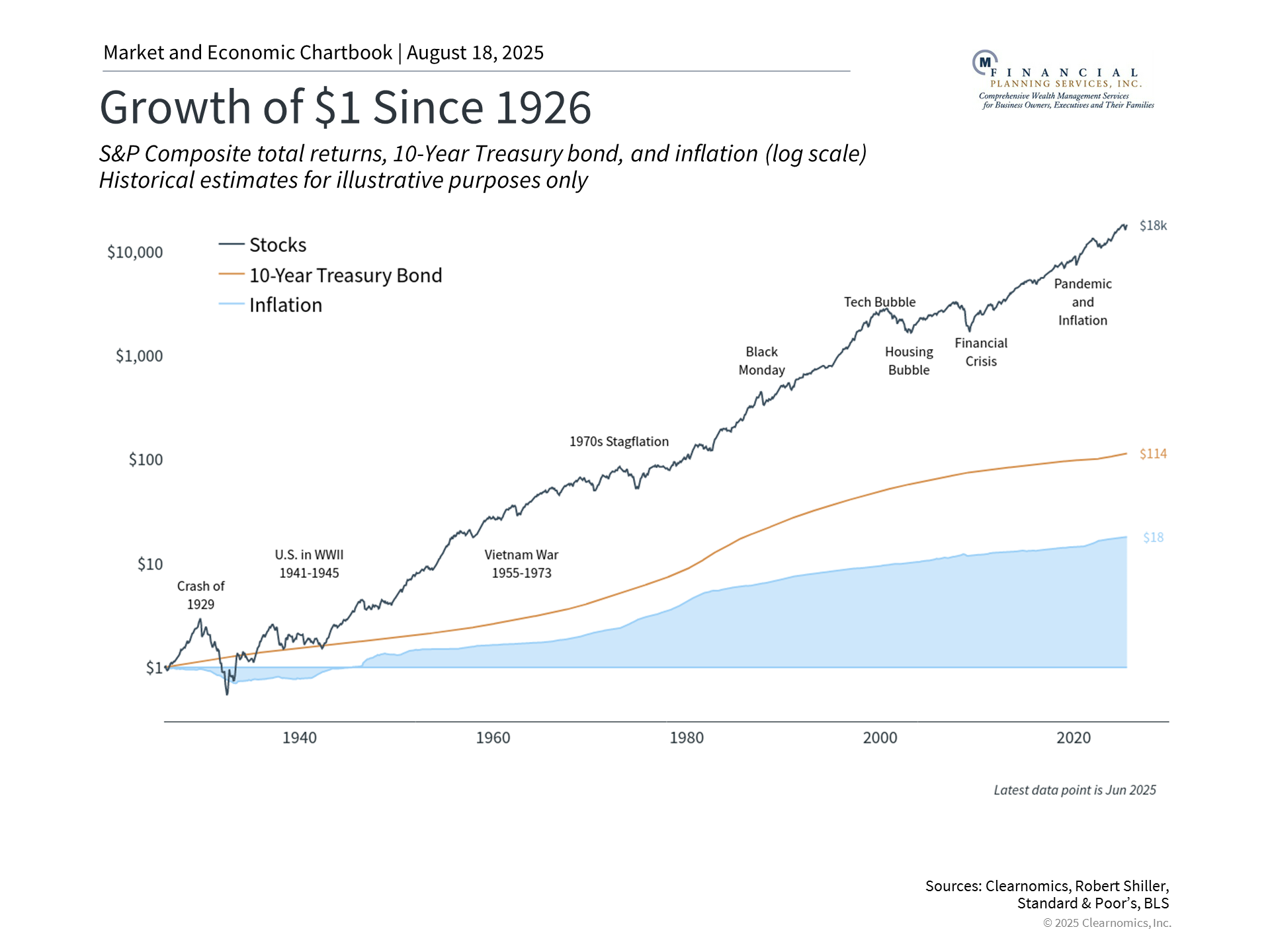 |
Most investors and savers know that beating inflation is one of the main reasons to invest. Keeping the buying power of your money, whether through stocks, bonds, or other investments, is important to make sure you can afford a comfortable lifestyle in the future. The chart above shows this clearly. What cost $1 one hundred years ago now costs $18. You can also see that price increases sped up in the 1970s and again recently.
You might think that zero inflation - or even deflation where prices fall - would be helpful. But inflation isn't just about what we pay for things. It's also about the health of the overall economy. Economic experts believe that a low but positive inflation rate, usually around 2%, creates the best balance for people and the economy.
Even moderate inflation of 2-3% can hurt savers over time. These rates might seem small compared to the very high inflation of the 1970s or recent years, but they add up. For example, at just 3% annual inflation, prices double roughly every 24 years. This means $100,000 in today's buying power would need $200,000 in two decades. This erosion is especially hard for retirees and people holding cash.
Inflation remains stubborn
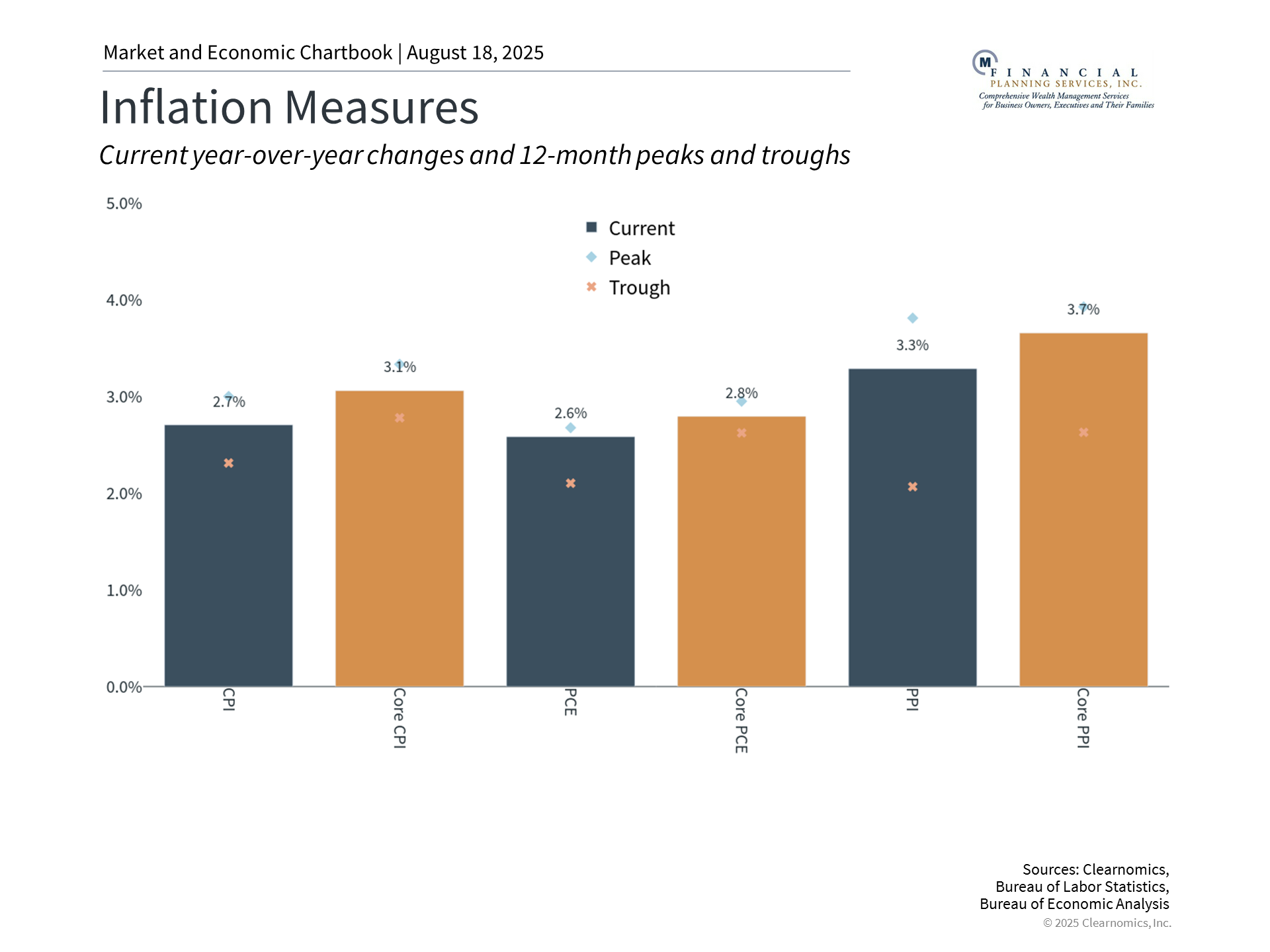 |
Many people worry about how tariffs might affect inflation. The latest Producer Price Index report (which tracks what businesses charge each other) shows that prices jumped in July. Wholesale prices surged 0.9%, the largest monthly increase since June 2022. This was much higher than economists expected.
These numbers matter because increases in wholesale prices often show up in consumer prices several months later, as higher costs move through the supply chain. The latest Consumer Price Index report (which tracks what consumers pay) shows prices rose 2.7% over the past year. Much of this was due to higher housing costs.
These price increases appear where consumers feel them most: restaurant meals rose 3.9% over the past year, medical care 3.5%, and car insurance jumped 5.3%. Even furniture has risen 3.4%, adding pressure to family budgets already stretched by years of higher prices.
Beating inflation requires smart investment choices
 |
While these increases are notable, inflation is still well below the very high rates from 2021 to 2022. However, even if tariffs don't cause sudden price jumps, they may raise the average level of prices over time. This eats away at the value of cash, especially if wage gains don't keep up with price increases.
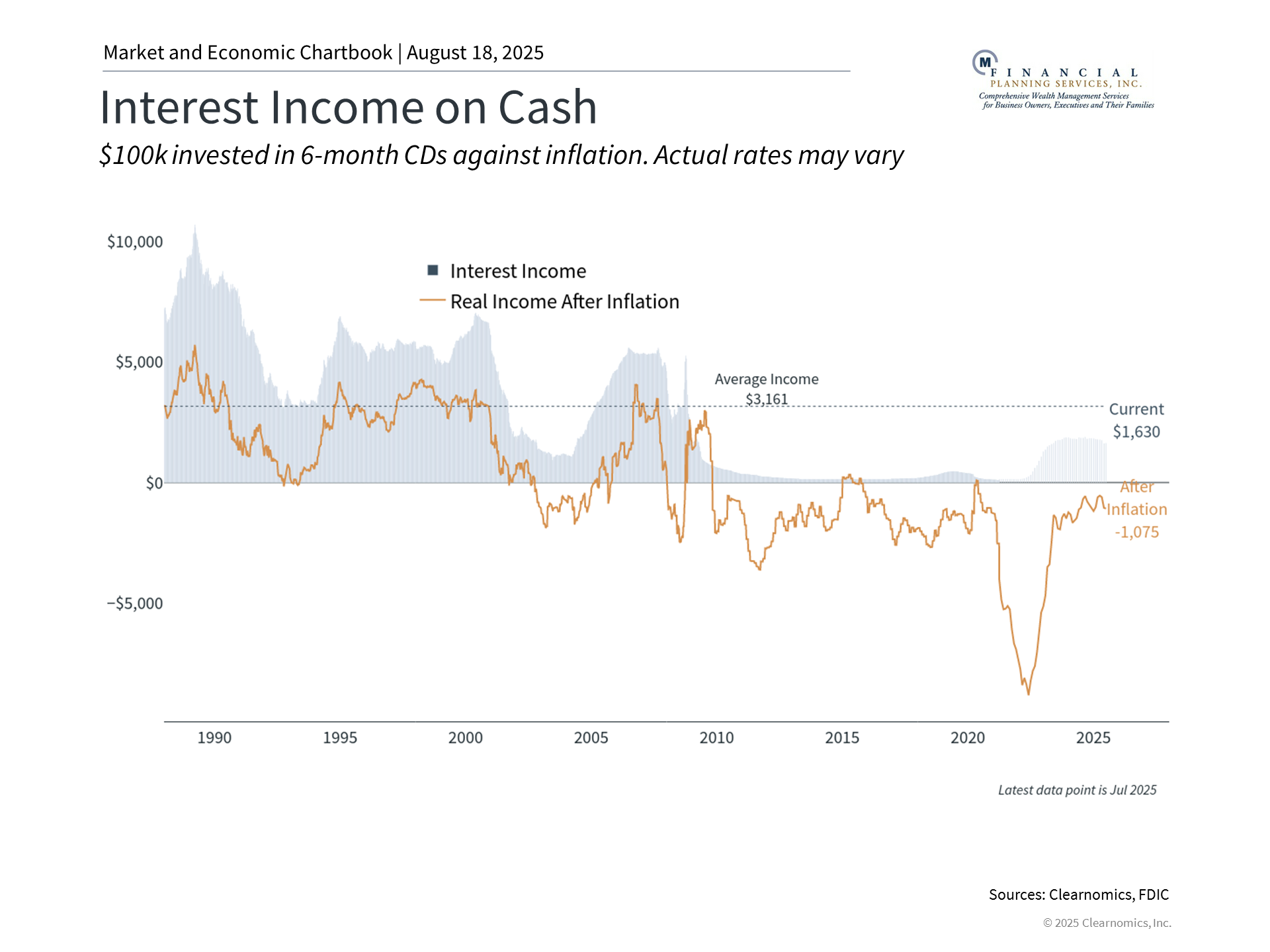
The chart above shows that the average interest earned on cash hasn't kept up with inflation. Plus, the amount held in money market funds is still at all-time highs of $7.1 trillion, even as short-term interest rates have dropped.
History shows that both stocks and bonds have beaten inflation over long periods. However, stocks can be volatile during inflationary periods, as we saw in 2022. This is why having a balance of different types of investments that can handle both inflation and market ups and downs can help investors stay on track. Most importantly, investors should avoid making big portfolio changes based on monthly inflation reports or tariff concerns.
The bottom line? Inflation's gradual erosion of purchasing power is a key investment challenge. Having the right mix of investments that can generate income and growth is the best way to reach your financial goals.
1. https://www.bls.gov/news.release/ppi.nr0.htm
2. https://www.bls.gov/news.release/cpi.t01.htm
3. https://www.ici.org/research/stats/mmf